Over the past 50 years, science’s rapid progress has generated a growing gap between public knowledge and that possessed and used by the so-called “dominant elites.”
Avram Noam Chomsky is an American professor and public intellectual known for his work in linguistics, political activism, and social criticism. He has drawn up a list of the “10 strategies of manipulation employed through the mass media,”
Take 5 minutes to read this, if only to expand your knowledge. You won’t regret it!
1. Distract and divert
2. Problem-Reaction-Solution
3. Gradually except the unacceptable
4, Defer to some future time
5. Treat the public like children
6. Use more emotion than reflection
7. Dumb down the public
8. Stimulate public complacency with mediocrity
9. Stimulate public self guilt
10. Know the public better than it knows itself
1. Distract and Divert
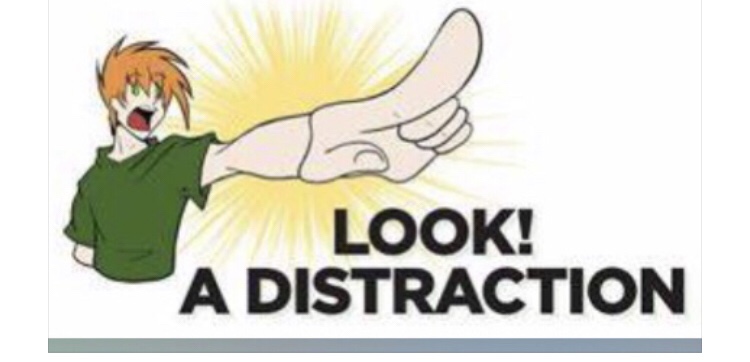
The primordial element of social control – the “distraction strategy” – diverts the public’s attention from major problems and changes (decided by political and economic elites, of course), by flooding them with continuous distractions and insignificant information.
Experience has proven that the simplest method of gaining control of the public is to keep them undisciplined and ignorant of basic system principles, while at the same time keeping them confused, disorganized, and distracted with matters of “no real importance.”
The dIstraction strategy is essential in preventing the public from becoming interested in essential knowledge and keeping its attention deviated from real social problems — imprisoned by themes without any real importancce.
Keep the public busy, busy, busy . . . with no time to think!!! (Silent Weapons for Quiet Wars ′′)
2. Problem-Reaction-Solution
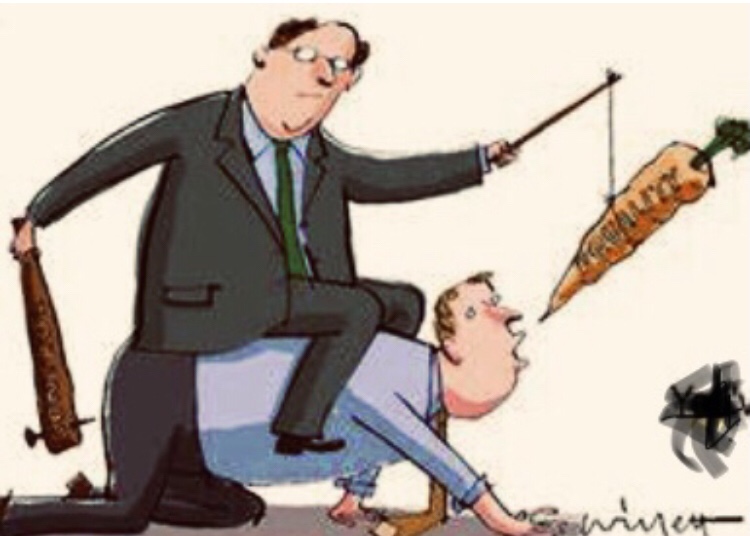
Using this strategy, a problem is “created,” that is, a situation that will cause a certain reaction from the public is “planned.” The goal is the ability to mandate measures the public will accept.
For example, let urban violence intensify, or organize a bloody attack, with the aim of having the public demand new security laws and policies, all to the detriment of freedom!
Or, create an economic crisis to demote social rights or dismantle public services that the public will accept as a necessary evil.
3. Gradually Accept the Unacceptable

To make an unacceptable measure acceptable, it should be applied gradually, drop by drop, over consecutive years.
For example, many radically new socioeconomic conditions (neoliberalism) were imposed in this way (gradually) during the 1980s and 1990s. So many changes were implemented during this period that had they been implemented all at one time they would have caused a Revolution.
4. Defer (to some future time)

- The public may find this acceptable;!
“Deferring” is a strategy used to get an unpopular decision accepted. The sacrifice is presented as “painful but necessary,” to gain public acceptance in the moment for future application.
It’s easier to accept a future sacrifice then it is to accept an immediate one.
- First, because sacrifice is not to be made immediately
- Second, because the public tends to “naively hope” that ′′everything will be better tomorrow, ′′ and maybe the sacrifice can be avoided.
This also gives the public time to get used to the idea of the sacrifice and to more easily accept it when the time comes.
5. Treat Public like Children

Most advertising uses a childish intonation, as if the public were either a young child or some kind of mental moron.
If someone addresses you as if you are a child, then based on suggestibility, you will probably respond or react without a critical sense, like that of a child.
See ′′Silent Weapons for Quiet Wars ′′
6. Use more emotion than reflection
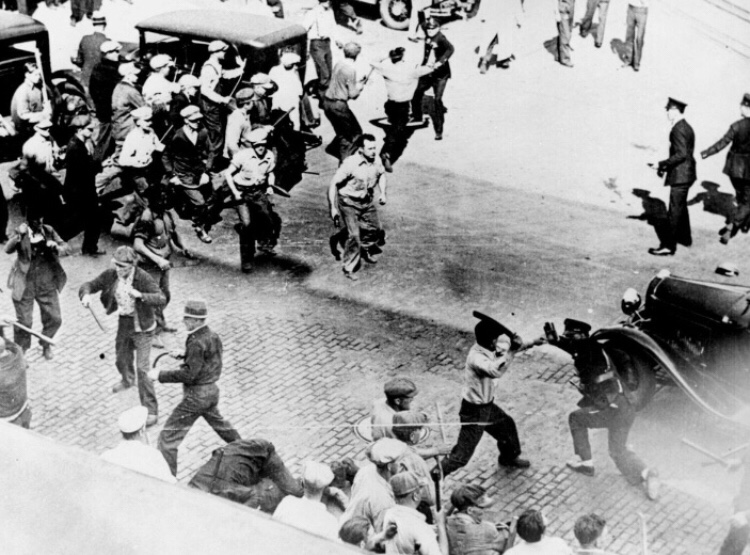
“Taking advantage of emotion” is a classic technique used to provoke a short circuit of rational analysis and the critical sense of an individual. Additionally, the use of emotional register allows the unconscious to:
- Implant or inject ideas, desires, fears, and compulsions
- Induce behaviors.
7. Dumb Down the Public

Lower the quality of education so that the public is incapable of understanding the technologies and methods used for their control and slavery..
The quality of education given to the so-called “lower social classes” must be of the poorest sort, so that the moat of ignorance isolating the so-called “inferior class” from the so-called “superior class” is and remains incomprehensible to the so-called “inferior class.”
8. Stimulate public complacency with mediocrity.

Push the public to think it’s fashionable to be stupid, vulgar and ignorant.
9. Strengthen public self-guilt

Make the public believe that only they are the culprits of their disgrace, because of their insufficient intelligence, skills or efforts. Then, instead of rebelling against the economic system, individuals devalue and blame themselves.
This, in turn, creates a depressive state, whose effects inhibit self-action. Without action there is NO REVOLUTION!
10. Know the public better than it knows itself

Thanks to biology, neurobiology, and applied psychology, the ′′system′′ has enjoyed advanced knowledge of the human being, both in its physical and psychological form. This system has managed to learn more about the so-called “common individual” than she or he knows about self. .
What does this mean?
This means that, in most cases, the “system” exercises greater control and greater power over the public than the public exercises over itself!
And so . . .
- Is control of major media news and cultural media used as a means of inducing desired forms of partial insanity among large populations?
- Is deliberate and habitual falsification of information a way of creating desensitization effects in the mass population?
- Is this further supplemented by the introduction of programmed subliminal psychological material with a predetermined effect?
Is this so? You decide!

 Earth Changes Hotline by Barbara Schneider
You must be logged in to post a comment.